Saturday, June 7, 2025

Roy Clay Sr.

 Black Leaders in Tech
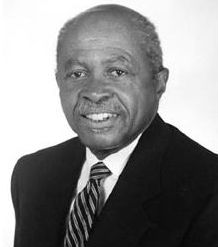

Roy Clay Sr. who was often called the "Godfather of Silicon Valley", is a computer scientist and entrpreneur. One of the first black men to attend Saint Louis University, he began his career in the 1950s programming massive early computers, including work on radiation simulation software. In the 1970s, he became a major force in the Silicon Valley, leading the team that brought Hewlett-Packard into the computer market. His groundbreaking contributions earned him a place in the Silicon Valley Engineering Council's Hall of Fame in 2003. 

1) What was their contribution to the field of technology
Roy Clay Sr. made significant contributions by helping to develop early computer programming and engineering breakthroughs. He played a key role in Hewlett-Packard's entrance into the computer market by leading the team that built HP's computer divisions. His work helped shape Silicon Valley's growth and innovation during the formative years of the tech industry. 

2) What inspired them to pursue careers in technology?
He pursued a career in technology because he was inspired by his passion for innovation and problem-solving. After being one of the first black men to attend Saint Louis University, he saw the emerging potential of computers and programming in the 1950s. His drive to break barriers and contribute to the growing tech field motivated him to enter and excel in technology. Additonally, Clay wanted to create opprotunities for other black professionals in a field that was largely inaccessible to minorities at the time. His dedication helped shape Silicon Valley into a more diverse and inclusive space for tech innovation.

3) How did under representation shape the experiences in technology?
Underrepresentation shaped by Clay's experience by placing him among the very few black professionals in the early days of computing, a field dominated by white men. He faced barriers that required resilience and determination. His success in leading HP's computer division demonstrated how he overcame these challenges and helped pave the way for greater diversity in technology. Despite the lack of representation, Clay remained committed to excellence and innovation, inspiring future generations of black engineers and technologists. His journey highlights the importance of breaking barriers to create more inclusive opprotunities in the tech industry. 

4) What can be done to combat racial bias in computing and technology today?
It's important to follow the example set by Clay. This means creating more opprotunities for underrepresented groups to enter and lead in tech fields. Encouraging diversity through education, mentorship, and inclusive hiring practices can help break down barriers. Companies should also foster environments where diverse voices are heard and valued, helping to devlip technology that serves everyone fairly. Celebrating and learning from others who overcame underrepresention can inspire ongoing change toward equity in the tech industry. 

Amanda Nguyen

Asians in Technology


Amanda Nguyen is a social justice activist, Hardvard graduate, and the daughter of Vietnamese refugees. After surviving sexual assault in 2014, she discovered how difficult it was to access basic information about her rights and realized there was no consisten national protections for survivors. In response, she wrote the Sexual Assault Survivors' Act, which became law in 2016 and guarantees rights like free rape kit procedures and long-term evidence preservation. She later founded Rise, a civil rights organization that helps others write and pass their own legislation. Her work has earned her a Nobel Peace Prize nomination. 

1) What was their contribution to the field of technology
Amanda Nguyen is a survivor of sexual assault. She didn't necessarily contribute directly in the field of traditional technology  like software or engineering, but she used digital platforms and tools to create social and legislative change. As the founder and CEO of Rise, she helped build a coalition that uses technology and social media to empower survivors of sexual assault, raise awareness, and assist people in drafting and passing their own laws. Through these platforms, she has modernized the way advocacy can be organized and amplified globally. 

2) What inspired them to pursue careers in technology?
Nguyen was inspired to take actions after experiencing the failures of the legal system firsthand when trying to access her rights as a sexual assault survivor. The lack of consistent legal protections motivated her to write and adovocate for the Sexual Assault Survivors' Rights Act. While not inspired by technology itself, her mission led her to use techology-driven advocacy tools to mobilize support, share survivor stories, and drive policy reform- effectively blending activism with the power of digital communication and innovation. 


3) How did under representation shape the experiences in technology?
Underrepresentation shaped Amanda's experiences by forcing her to confront systems that didn't reflect or protect people like her. As a survivor she had to create her own tools and platfoorms- like Rise- to make her voice heard and fight for change that the existing tech and legal systems overlooked. She realized that without representation, the needs of the marginalized communities were often ignored or dismissed. By stepping into the leadership role, she not only advocated for herself but also created a space for others to do the same. Her works shows how underrepresented voices can drive powerful change when given the tools and support to lead. 

4) What can be done to combat racial bias in computing and technology today?
To combat racial bias in computing and technology today, we need to prioritize diversity in tech education and leadership. Bringing more people of color into design, development, and decision-making roles helps create more inclusive systems. Tech companies should also implement bias training and regularly audit algorithms for discrimination. Community voices- especially from underrepresented groups should be involved in shaping policies and products. Supporting organizations that advocate for equality- like rise- is another key step. Schools and workplaces can also offer mentorship and resources to empower marginalized individuals in tech. Ultimately, fighting racial bias requires both awareness and action at every level.  


Roy Clay Sr.

 Black Leaders in Tech Roy Clay Sr. who was often called the "Godfather of Silicon Valley", is a computer scientist and entrpreneu...